
St Paul's Church, Barton
A Victorian church on the Isle of Wight replaced its old heating with ceiling-suspended infrared heaters, delivering instant warmth to a large nave with high arched ceilings.
- Building
- Grade II listed, built 1844, neo-Romanesque
- Diocese
- Portsmouth
- Previous system
- Ageing convection heating
- New system
- Ceiling-suspended infrared radiant heaters
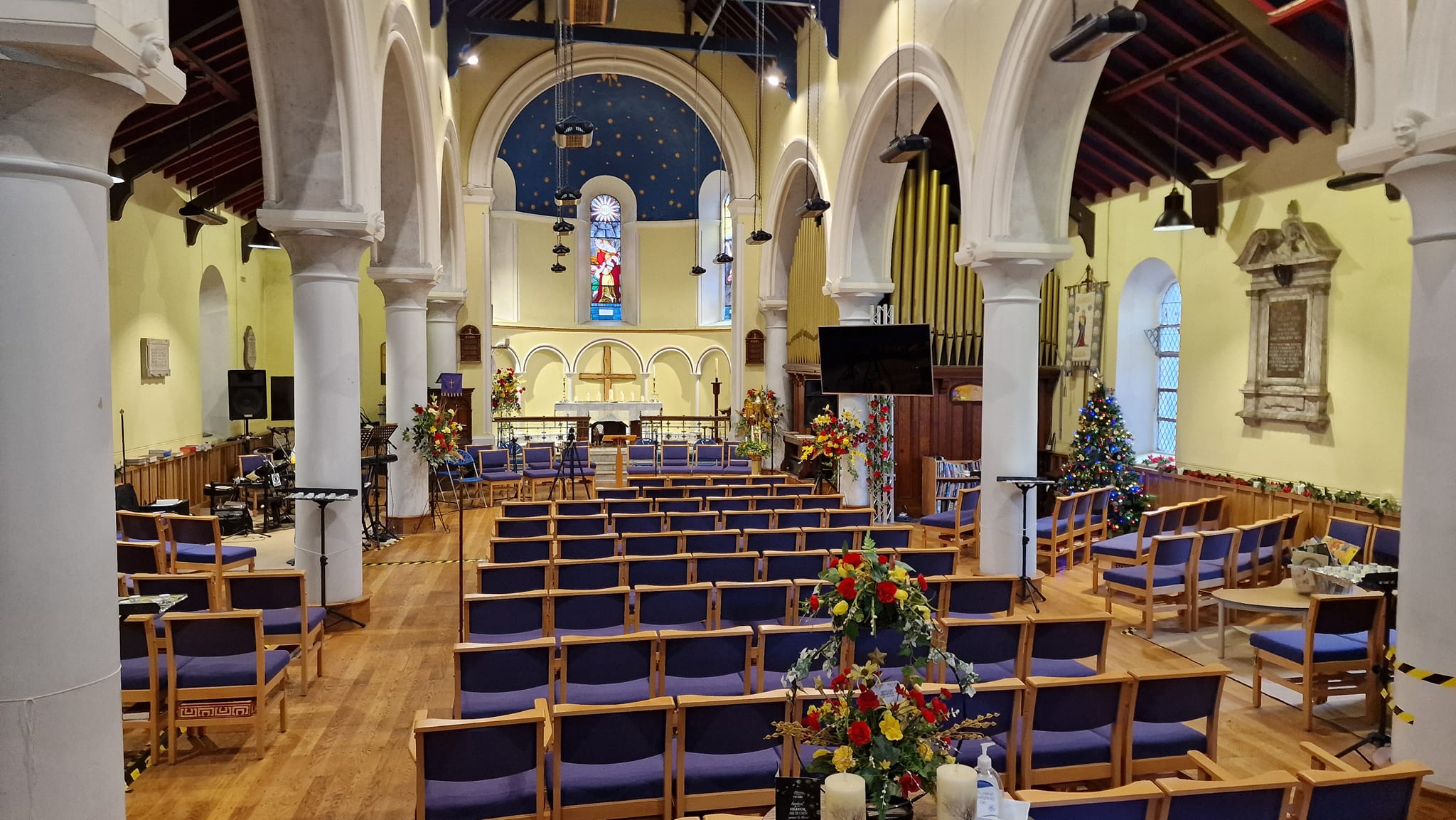
St Paul's is a Grade II listed neo-Romanesque church in Barton, Newport on the Isle of Wight, designed by James William Wild and built in 1844. The nave has a high arched ceiling, stone columns and large stained glass windows. Modern upholstered chairs have replaced the original pews, and transepts give the interior a wide, open feel.
The challenge
The previous heating system struggled with the sheer volume of air in the tall nave. Heat rose to the ceiling and stayed there, leaving the congregation cold at seating level. Pre-heating took hours and energy costs were high relative to the short periods the church was actually occupied.
The approach
Infrared radiant heaters were suspended from the ceiling structure on drop rods, positioned to direct warmth downward toward the seating area. The ceiling-mounted approach keeps the heaters well above head height and avoids any intervention into the walls or floor.
Because infrared heats people and surfaces directly, the system reaches comfortable temperature within minutes of being switched on. There is no need to heat the entire air volume of the tall nave.
Installation
The heaters were fixed to the existing roof structure with cabling routed along the ceiling. The installation was straightforward and completed with minimal disruption to the church's regular programme of services and community events.
Result
The church now has instant, responsive heating that runs only when the building is occupied. The congregation feels warm at seating level regardless of the air temperature in the upper reaches of the nave. Running costs dropped because pre-heating hours were eliminated entirely.
Learn more about infrared radiant heating
Warms people and surfaces directly rather than heating the whole air volume, which suits tall, draughty church buildings that were never designed to be heated.
Want to talk through your options?
Tell us about your building and we will suggest the heating that suits it.